
You’re shopping online for a new coffee maker. Two options have similar prices and similar reviews. One has bright, sharp photos showing every angle, the buttons up close, and a lifestyle shot of it sitting on a clean kitchen counter. The other has one blurry image on a wrinkled tablecloth.
Which one do you buy?
That decision happens in seconds and it happens almost entirely because of visuals. The impact of product images on sales is not subtle. It’s the difference between a click and a scroll-past.
Product photography is one of the most powerful and most underestimated sales tools available to any online business. Great images communicate quality, build trust, and push customers closer to the buy button faster than almost any other factor.
This guide breaks down exactly how product photography increases sales, what it does to the customer’s brain, and how you can use it to grow your store.
Why Product Photos Matter in Marketing
Why do product photos carry so much weight in modern marketing?
Because in the digital world, your images are your product. Customers can’t touch it, smell it, or try it on. All they have is what they see on the screen. And what they see shapes every assumption they make about your brand.
Visual content for product marketing works because the human brain processes images 60,000 times faster than text, according to research from MIT. A customer forms a first impression of your product in milliseconds. If that impression is positive, they stay and keep reading. If it’s negative or unclear, they leave and they don’t come back.
Good product photography also communicates brand values without saying a word. Clean, professional images signal that you care about quality. Inconsistent or low-effort photos signal the opposite.
In a marketplace where customers are comparing dozens of options at once, your visuals are often the first and sometimes only pitch you get.
Understanding Customer Buying Behavior and Visuals
How do visuals actually influence the way customers decide to buy?
Understanding the role of product photography in online shopping decisions starts with understanding a simple truth: online shoppers are trying to eliminate uncertainty. They can’t hold the product, so they rely almost entirely on images to fill that gap.
Research from Salsify found that 88% of consumers say detailed product content is extremely or very important to their purchase decisions. Visuals are the largest part of that content.
Here’s what’s happening psychologically. When a customer sees a high-quality image showing a product clearly, from multiple angles, with visible details, their brain interprets that as evidence that the product is real, trustworthy, and worth the price. Poor or limited images create doubt. Doubt kills conversions.
Visual cues also trigger emotion. A lifestyle image of someone using your product in a real-world scenario creates a moment of aspiration. The customer mentally places themselves in that image and thinks, “I want that.”
Clarity, detail, and emotional resonance together form the visual foundation of every buying decision made online.
How Product Photography Increases Sales
What specifically does good product photography do to drive more sales?
The connection between how product photography increases sales and real revenue is well-documented. Here’s exactly how it works:
It builds trust and credibility. Professional images signal that your business is legitimate. Customers associate image quality with product quality, even subconsciously. A blurry photo makes people wonder what you’re hiding.
It reduces uncertainty. The number one reason people abandon online shopping carts is doubt about what they’re actually getting. Clear, detailed images answer the questions customers have before they even have to ask them.
It enhances perceived value. A product photographed beautifully looks like it’s worth more. Think about the difference between a burger shot under fluorescent lights versus the same burger photographed by a professional food photographer. Same burger. Wildly different perception.
It encourages faster buying decisions. When customers can see everything they need to see, they don’t hesitate. Hesitation leads to browser tabs closing and carts being abandoned.
It improves the overall shopping experience. Browsing a store with beautiful, consistent product imagery simply feels better. It’s enjoyable. And customers who enjoy the experience spend more.
According to BigCommerce, product pages with multiple high-quality images see up to 58% higher conversion rates than pages with a single image. The data is clear on this.
Impact of Product Images on Sales and Conversions
What does the data actually say about the impact of product images on sales?
The relationship is direct and significant. Ecommerce conversion optimization images are not a nice-to-have. They’re a conversion lever that many stores are leaving untouched.
Studies from Shopify show that the quality and quantity of product images are among the top factors influencing purchase decisions on ecommerce sites. More angles equal more confidence. More confidence equals more conversions.
Specific elements that drive impact include multiple image angles, zoom functionality that lets customers inspect fine details, and scale references that help customers understand actual size. A shoe that looks great in one angle might look even better from the side or from the sole. Giving customers that view builds the kind of confidence that converts.
Images also affect your bounce rate and your time on page, both of which signal to Google how trustworthy and relevant your content is. Better photography doesn’t just sell more products. It improves your SEO too.
High-Quality Product Images Benefits
What are the real, tangible benefits of investing in high-quality product images?
The high-quality product images benefits extend far beyond just looking nice. Here’s what you actually gain:
Professional appearance. Clean, well-lit, well-composed images make any brand look polished and established. Even a small store can compete with major retailers when the photography is on point.
Stronger brand perception. Consistent image style across your product catalog creates a sense of a brand that has its act together. Customers trust brands that feel cohesive.
Increased customer confidence. When customers can clearly see what they’re buying, they buy more and return less. Returns are expensive. Good photography is cheaper.
Better engagement across platforms. High-quality images perform better in ads, on social media, in email campaigns, and on product pages. One good photoshoot feeds your entire marketing ecosystem.
Why high-quality product images increase conversion rates comes down to one word: trust. And trust is the currency of every transaction that happens online.
Product Photography for Ecommerce Success
Why is product photography so uniquely important for ecommerce compared to physical retail?
In a physical store, a customer can pick up the product, turn it over, feel the weight of it, and try it on if needed. That tactile experience builds confidence naturally.
Online, that experience doesn’t exist. Product photography for ecommerce success is about replacing the physical experience with a visual one that’s so complete and clear that customers feel like they’ve already held the product before buying it.
Professional product photography also plays a direct role in reducing returns. When customers know exactly what they’re getting, they’re less likely to be disappointed when it arrives. According to the National Retail Federation, return rates for online purchases are significantly higher than for in-store purchases. Better images narrow that gap.
It’s also a competitive advantage. If your competitor has weak product photography and yours is excellent, you win that customer almost by default.
Brand Trust Through Visuals
How does photography contribute to something as intangible as brand trust?
More directly than most businesses realize. Brand trust through visuals is built over time through consistency and quality. Every image you publish is a signal. Collectively, those signals form your visual brand identity.
Professional images communicate that you take your business seriously. Inconsistent or low-quality photos communicate the opposite, even if your product is genuinely excellent.
Think about the brands you personally trust online. Apple, Nike, Glossier. Their product photography is impeccable. It’s not coincidence. It’s strategy. Their images carry the same visual standards across every platform, every product, every campaign.
For small businesses, this is both a challenge and an opportunity. You may not have Apple’s budget, but you can absolutely have Apple’s discipline when it comes to visual consistency.
A customer who trusts your visuals trusts your brand. And a customer who trusts your brand buys from you again.
Product Presentation Techniques That Drive Sales
What are the best product presentation techniques to actually maximize sales impact?
The way you present a product visually is as important as the product itself in an ecommerce context. Here’s what works:
Clean and minimal backgrounds. A white or neutral background puts all focus on the product. It’s clean, professional, and works universally across platforms. It also makes images easier to reuse across different marketing contexts.
Lifestyle shots. Show the product being used in a real-world context. A candle on a cozy bedside table sells the feeling, not just the candle. Emotion sells.
Multiple angles. Front, back, side, close-up on details, and scale reference. Give customers the full picture so there’s no uncertainty left.
Props and context. Thoughtfully chosen props can communicate product use, quality, and lifestyle without a single word. A leather wallet photographed next to a sleek watch communicates sophistication.
Consistency across listings. All images in your catalog should feel like they belong to the same family. Same lighting style, same color treatment, same framing approach. Consistency builds brand recognition and trust.
Visual Content for Product Marketing
How should product photography fit into a broader visual content strategy?
Your product images don’t just live on your product page. They power your entire marketing operation. Visual content for product marketing should be planned with that wide usage in mind from the very beginning of your photography process.
The same product shots can appear in paid ads, organic social posts, email newsletters, blog content, and retargeting campaigns. A single well-executed photoshoot can generate months of marketing content across multiple channels.
Visual storytelling, combining your product images with context, narrative, and brand personality, is one of the most effective ways to build a loyal audience. Instead of just showing what the product looks like, show what it represents and how it fits into your customer’s life.
Aligning your visual content with your marketing strategy means planning your photography around campaigns, seasons, and key messaging, not just product launches. The brands that do this well create a visual world that customers want to be part of.
Common Mistakes to Avoid in Product Photography
What mistakes are quietly hurting sales on product pages right now?
These are the most damaging and most common errors in how product photography increases sales by doing the opposite:
- Poor lighting. Harsh shadows, uneven exposure, and dull flat light make products look unappetizing. Lighting is everything.
- Low-resolution images. Blurry or pixelated photos look unprofessional and prevent customers from seeing product details. Always shoot high-resolution.
- Inconsistent style. Mixing different backgrounds, lighting setups, and editing styles across your catalog creates a disjointed, chaotic experience.
- Only one angle. A single image leaves too many questions unanswered. Always provide multiple views.
- Over-editing. Aggressively filtered or heavily retouched images can misrepresent the product and lead to returns and negative reviews. Keep edits realistic.
Tips to Improve Product Photography for Better Sales
How can you actually improve your product photography starting today?
These practical tips will help how product photography increases sales for your store:
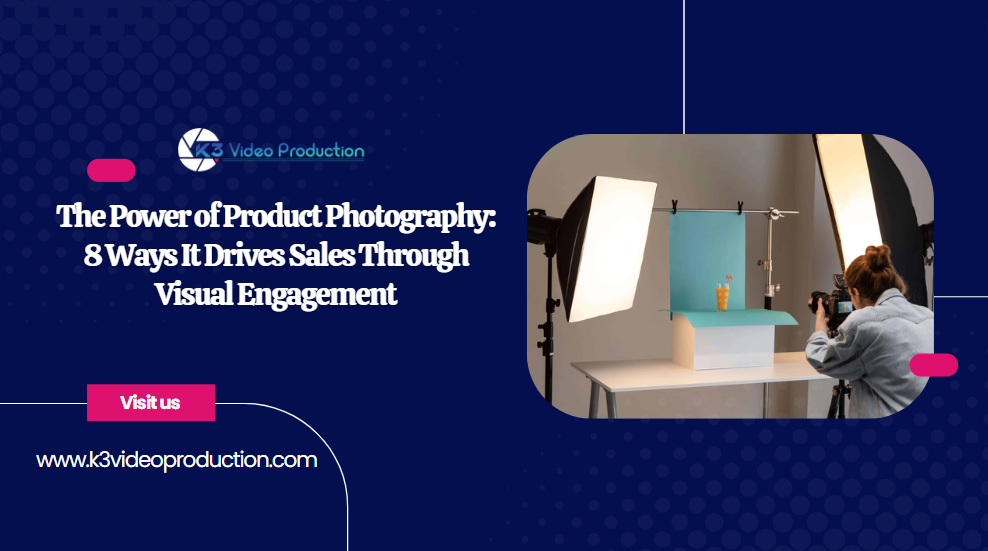
- Invest in good lighting first. Natural window light or an affordable softbox setup will make a bigger difference than any camera upgrade.
- Use consistent backgrounds. White, gray, or a consistent lifestyle setting. Pick one approach and stick to it across your catalog.
- Focus on product details. Shoot macro close-ups of textures, stitching, materials, and features. Details build confidence.
- Optimize images for web. Large uncompressed files slow your page down and hurt your SEO. Compress images without sacrificing quality using tools like TinyPNG or Squoosh.
- Test different approaches and track results. A/B test product images the same way you would test ad copy. Let conversion data tell you what’s working.
Conclusion
Product photography is not decoration. It’s one of the most direct and measurable drivers of ecommerce revenue available to any online business.
From building instant trust to reducing returns to pushing customers through the buying decision faster, the impact of product images on sales is real, significant, and well-supported by data.
The good news is that improving your product photography doesn’t require a massive budget. It requires intention, consistency, and a genuine commitment to showing your product in its best light, literally and figuratively.
Audit your product images today. Look at them through the eyes of a first-time visitor who knows nothing about your brand. What do those images communicate? What questions do they leave unanswered?
Then fix those things. Your conversion rate will thank you.
FAQs
Product photography increases sales by building customer trust, reducing uncertainty about what they’re buying, enhancing the perceived value of the product, and making the overall shopping experience more enjoyable. When customers can clearly see and understand a product through high-quality visuals, they’re far more likely to complete a purchase.
In ecommerce, images replace the physical shopping experience. Customers can’t touch or try a product online, so they rely entirely on visuals to make buying decisions. High-quality images answer the questions customers have, build confidence in the brand, and directly influence whether someone adds a product to their cart or moves on to a competitor.
Yes, significantly. Research from BigCommerce and Shopify consistently shows that pages with multiple high-quality images convert at substantially higher rates than pages with single or low-quality images. The combination of trust, clarity, and visual appeal that professional photography provides directly translates to more completed purchases.
A combination of clean studio shots on a neutral background, close-up detail images, and lifestyle photos showing the product in real-world use tends to perform best. Multiple angles are essential. Studio shots communicate professionalism and detail. Lifestyle shots build emotional connection and help customers visualize using the product themselves.
Start with natural light near a large window on an overcast day for soft, even illumination. Use a clean white or neutral background made from poster board. Shoot with a modern smartphone on its highest quality setting. Use free editing tools like Lightroom Mobile or Snapseed to adjust brightness and white balance. Focus on consistency across all your images rather than perfection in any single one.