In 2026, every business needs video. Product demos, social ads, testimonials, how-to content, the list never ends. And your audience expects it constantly.
The problem? Creating high-quality marketing videos takes serious time and effort. Most businesses do not have a full production team on standby. Deadlines pile up, budgets stretch thin, and content calendars get scary fast.
That is where AI tools for video marketing come in. They help businesses script, edit, optimize, and publish videos in a fraction of the time. No giant crew required.
Whether you run a local shop or manage marketing for a growing brand, AI is changing what is possible. In this post, we are breaking down how AI improves video marketing, which tools are worth your attention, and how to use them without losing your brand’s human touch.
What are AI Tools for Video Marketing?
They are software platforms that use artificial intelligence to help businesses create, edit, and optimize marketing videos faster and more efficiently.
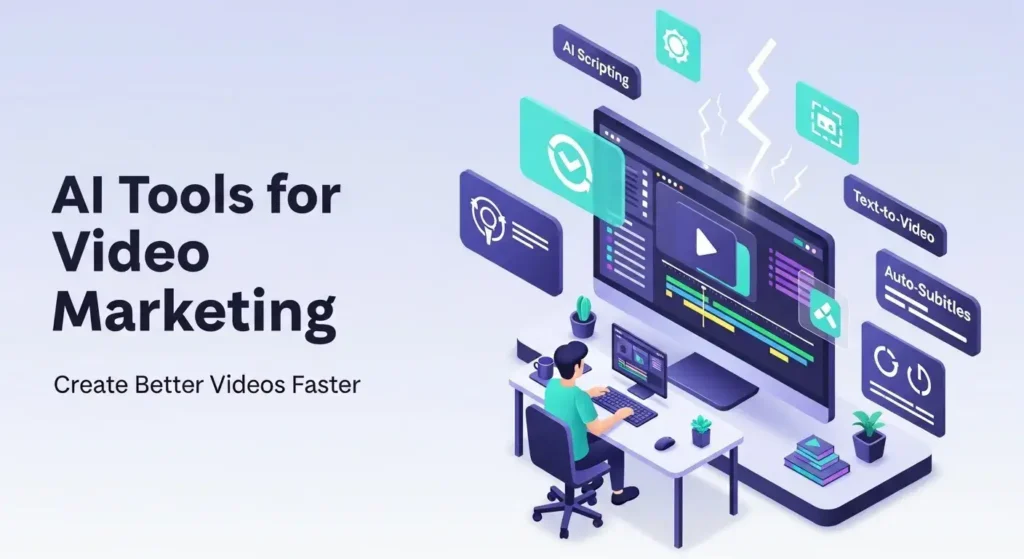
These tools cover a wide range, including AI scripting assistants, automated editing software, voiceover generators, caption tools, and even platforms that build entire videos from a text prompt.
Traditional video marketing workflows involve a writer, a videographer, an editor, and a designer. AI-assisted workflows can consolidate all of that into one or two people using the right software.
That is why AI adoption in video marketing is accelerating. It is not just about saving time. It is about staying competitive when video demand keeps rising and production resources stay limited.
How AI Improves Video Marketing
Here are the four biggest areas where AI is making a real difference.
1. Faster Content Creation
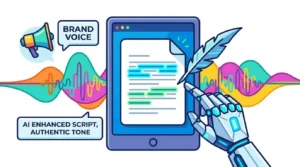
AI tools can generate a full video script in under a minute based on your product, audience, and tone. From there, editing tools can cut raw footage into a polished video automatically.
What used to take two days can now realistically happen in two hours. For businesses running weekly campaigns, that speed advantage is massive.
2. Better Audience Targeting
AI-powered video platforms analyze viewer behavior and recommend content adjustments based on what your audience actually responds to. Some tools personalize video content dynamically, showing different versions to different audience segments.
This kind of targeted personalization was once reserved for enterprise brands with big budgets. AI has made it accessible to almost anyone.
3. Smarter Editing and Automation
Automated video editing tools handle the repetitive stuff that eats your time. Removing silences, adding captions, creating cuts at natural breaks, formatting for different platforms — AI does all of it.
Tools like Adobe Premiere Pro’s AI features or Opus Clip can reformat a long video into multiple short clips for TikTok, Reels, and YouTube Shorts simultaneously.
4. Improved Marketing Efficiency
A smart video marketing workflow powered by AI means fewer bottlenecks. Content gets produced faster, reviewed more quickly, and published on time. Agencies and in-house teams can handle more campaigns without adding headcount.
Benefits of Using AI Tools for Video Marketing
Here is the honest rundown:
- Time savings are huge. Production timelines shrink from days to hours.
- Consistency improves. AI helps maintain brand style and tone across every video.
- Scalability becomes real. Small teams can run campaigns that used to require large crews.
- Editing gets simpler. Beginners can produce decent-looking videos without formal training.
- Costs come down. Less manual labor means lower production expenses over time.
For small businesses especially, AI tools level the playing field. A boutique brand can now produce video content that looks competitive with much larger companies without blowing a quarterly budget in a week.
Best AI Video Marketing Tools in 2026
Here are some of the top options businesses and creators are using right now:
- Synthesia: Creates AI-generated spokesperson videos from text. Great for training videos, product demos, and multilingual content.
- Runway ML: Advanced AI video generation and editing. Popular with creative teams who want serious control.
- Descript: Edit your video by editing the transcript. Ideal for talking head content and podcasts turned into video.
- CapCut Pro: Beginner-friendly, AI-powered, and excellent for social media marketing content.
- Pictory: Turns blog posts or scripts into video automatically. Perfect for content repurposing.
- HeyGen: AI avatar videos with customizable voices and appearances. Great for personalized outreach.
- Opus Clip: Automatically clips long videos into short highlights. Built for social media distribution.
When choosing a tool, prioritize ease of use, output quality, platform integrations, and whether it fits your actual workflow and content goals.
AI Software for Video Creation and Editing
Modern AI video creation software handles far more than basic cuts. It applies automatic transitions, generates captions with high accuracy, adds AI voiceovers in multiple languages, and even suggests visual templates that match your brand style.
For teams without a dedicated video editor, these platforms are genuinely game-changing. You upload your script or raw footage, and the AI builds a first draft. You review it, make adjustments, and export.
Post-production, which used to be the slowest part of the entire process, gets compressed dramatically. A product video that once took a full editing day can come together in under two hours using the right AI software.
Automated Video Editing Tools Explained
These tools use AI to analyze your footage and make editing decisions automatically.
Scene detection identifies natural breaks in your video and places cuts accordingly. Audio cleanup removes background noise, hums, and wind in seconds. Caption generation transcribes speech and places subtitles with timing accuracy over 95 percent in most cases.
For social media content specifically, automated editing tools are a huge win. You can take a 20-minute interview and have it turned into five short, punchy clips ready for Instagram and LinkedIn within an hour.
Brands running high-volume social media campaigns use these tools to stay consistent without burning out their creative teams.
AI Generated Marketing Videos: How They Work
AI generated marketing videos are built using artificial intelligence rather than traditional filming and editing. The process usually works like this.
You provide a script, a text prompt, or source content. The AI generates visuals, applies a voiceover using synthetic speech, adds music, and produces a finished video. Text-to-video platforms like Runway, Sora, and Synthesia lead this space.
Personalization is another major use case. AI can generate thousands of individualized versions of a marketing video, each with a different name, product, or regional message. At scale, this is something humans simply cannot do manually.
The creative limitation is real though. AI-generated videos can look polished but feel hollow without strong human direction behind them. Use AI to execute the vision, not replace it.
Video Content Automation for Businesses
Think about all the repetitive production tasks your team handles every week. Exporting videos in multiple formats, resizing for different platforms, adding captions, writing descriptions, scheduling posts.
AI and video content automation tools handle all of that without anyone touching it manually. Tools like Zapier integrations, Hootsuite’s video features, and platform-native schedulers let you build workflows where a video goes from edited to published with minimal human steps.
Repurposing is another big win. One 10-minute YouTube video can automatically become five Instagram Reels, three LinkedIn clips, a Twitter thread, and a podcast episode. AI does the reformatting and resizing. You just approve the output.
How to Use AI for Video Marketing and Content Creation
Here is a practical step-by-step approach that works:
- Start with clear content goals. Know who you are talking to and what action you want them to take.
- Use AI tools like ChatGPT or Jasper to brainstorm topics and draft scripts.
- Film your footage using AI-assisted camera tools for better framing and stabilization.
- Import into an AI editing platform for an automatic rough cut.
- Review and adjust the cut manually. Add personality, fix pacing, make it feel human.
- Use AI to generate captions, thumbnails, and video descriptions.
- Optimize for SEO using tools like TubeBuddy or VidIQ before publishing.
- Schedule and distribute using an AI-powered content calendar.
The best results always come from combining AI efficiency with genuine human creativity. AI handles the heavy lifting. You handle the storytelling.
AI Video Editing Tools for Small Businesses and Creators
Absolutely. This is one of the best things about the current landscape.
Most of the top AI video tools have affordable tiers built specifically for smaller teams. CapCut is mostly free. Descript has a solid free tier. Pictory starts at around $19 a month. These are not huge investments for the time they save.
For a local restaurant, a real estate agent, or a small ecommerce brand, these tools make it realistic to post two or three videos a week without hiring a full-time editor. That kind of content consistency is what builds audiences over time.
If you are based in a major market and want professional production support on top of your AI workflow, pairing these tools with a Video Production Company Chicago gives you the best of both worlds.
Ways AI Helps Businesses Create Professional Marketing Videos Quickly
Here is the real-world impact broken down simply:
- Editing turnaround drops from days to hours.
- Captions and subtitles appear automatically, improving accessibility and watch time.
- Thumbnail suggestions pull the best frames from your video for higher click rates.
- Branding stays consistent because AI applies your color palette, fonts, and logos automatically.
- Descriptions and metadata get generated in seconds, saving time on the SEO side.
- Multiple platform versions of each video are produced simultaneously.
For a business that posts video content regularly, these time savings compound. Over a full year, that could mean hundreds of extra hours freed up for strategy, sales, and actual business growth.
Challenges and Limitations of AI Video Marketing Tools
There are some honest limitations worth knowing before you go all in.
Generic-looking content is a real risk. When everyone uses the same AI templates with default settings, videos start looking identical. Your brand can disappear in the noise.
There is also a learning curve. Most AI tools are designed to be easy, but mastering them to get professional results still takes practice and time.
AI-generated voiceovers and avatars raise ethical questions too. Being transparent with your audience about AI use is increasingly important as viewers get more savvy about spotting synthetic content.
And no AI tool replaces genuine storytelling. If your video does not have a clear message, a relatable hook, or an emotional through-line, the best AI editing in the world will not save it.
Future of AI in Video Marketing
The roadmap looks like this:
- Hyper-personalized videos that adapt to individual viewer data in real time
- Real-time AI editing during live video broadcasts
- AI-powered interactive video experiences where viewers make choices
- Deeper integration with social media ad platforms for automated campaign optimization
- More realistic AI avatars and synthetic voices that are nearly indistinguishable from humans
Brands that start building AI-assisted video workflows now will have a significant head start as these capabilities become standard. The gap between early adopters and late movers in video marketing is going to widen fast.
Conclusion
AI tools for video marketing are not a trend. They are becoming the baseline.
Businesses that figure out how to use AI strategically are producing more content, in less time, at lower cost, without sacrificing quality. That is a serious competitive advantage in any market.
The key is balance. Use AI to handle the repetitive, time-consuming parts of production. Use your human team for the strategic and creative decisions that actually connect with audiences.
If you have not explored AI-powered video tools yet, start with one. Pick something small, like an automated caption tool or an AI script generator, and test it on your next project. Then build from there.
Better videos, faster production, smarter marketing — that is what AI makes possible in 2026. Time to use it.
FAQs
1. What are the best AI tools for video marketing in 2026?
Top options include Synthesia, Runway ML, Descript, CapCut Pro, Pictory, HeyGen, and Opus Clip, each suited to different production and marketing needs.
2. How does AI improve video marketing?
AI speeds up production, automates editing and captions, personalizes content for different audiences, and improves overall workflow efficiency.
3. Can small businesses use AI video editing tools?
Yes. Most AI video tools have affordable plans, and many are beginner-friendly, making them a strong fit for small teams and solo creators.
4. What are AI-generated marketing videos?
Videos created using AI technologies such as text-to-video generation, automated editing, synthetic voiceovers, and AI avatars instead of traditional filming.
5. How can businesses use AI for content creation?
By using AI for brainstorming, scripting, editing, caption generation, SEO optimization, and repurposing content across multiple platforms.