Last month a friend of mine, who runs a small marketing agency in Chicago, told me something funny. She said her team wrote a script with AI, and it read like it was written by a robot pretending to be a human pretending to be excited about spreadsheets.
We laughed. But it’s a real problem.
More businesses are turning to AI for video script writing. It’s fast. It’s cheap. It’s right there when you need it at 11pm before a client call.
But a lot of marketers worry AI-generated scripts sound flat. Generic. Like everyone else’s script wearing a different logo.
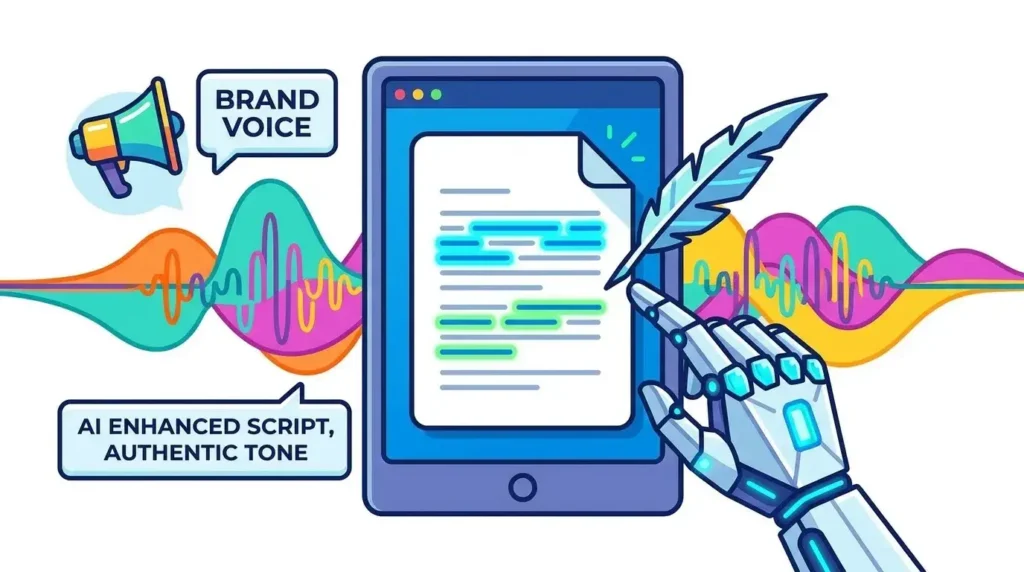
Here’s the good news. AI doesn’t have to replace your creative thinking. It works best as an assistant, not a director.
In this post, you’ll learn practical ways to use AI for video script writing while keeping your brand voice intact. No fluff. Just real tips you can use today.
Why Brand Voice Matters in Every Business Video
Let’s keep this simple. Brand voice is how your company sounds when it talks.
It’s not just what you say. It’s how you say it.
Think of two coffee shops. One says “Welcome, please enjoy your beverage.” The other says “Hey friend, grab a seat, your coffee’s coming right up.”
Same drink. Totally different vibe.
A consistent voice builds familiarity. And familiarity builds trust. Viewers recognize your company through your tone, your word choices, and the way you tell stories.
When your messaging shifts video to video, people notice. It confuses them, even if they can’t say exactly why.
What Makes a Strong Brand Voice?
A few things shape it:
- Tone (playful, serious, warm, bold)
- Personality (the “character” behind your brand)
- Word choice (simple words or industry jargon)
- Messaging style (short and punchy or detailed and thoughtful)
- Audience expectations (what your viewers already expect from you)
How Brand Voice Shapes Marketing Videos
A strong voice does three things for your videos.
It connects with customers on a personal level. It boosts engagement because people stick around for content that feels familiar. And it strengthens brand recognition, so people know it’s you even with the sound off.
How AI Helps Improve Video Scripts
So where does AI actually help? More than you’d think.
AI is great at brainstorming. You can throw it a rough idea and get ten directions back in seconds.
It also helps with structure. AI can organize a messy script into something that actually flows.
Here’s what AI tends to improve:
- Faster brainstorming
- Better structure
- Improved readability
- Stronger flow between scenes
- Grammar and clarity fixes
- Multiple script variations to test
- Expanding thin ideas into full scripts
- Trimming down scripts that ran too long
None of this replaces creativity. It just clears the runway so your creativity can take off faster.
Areas Where AI Adds the Most Value
AI tends to shine in a few specific spots.
Opening hooks. It’s great at spitting out ten different first lines so you can pick the strongest one.
Calls-to-action. AI can test different phrasing to see what feels natural.
Story flow, script clarity, and sentence-level polish also benefit from a quick AI pass, especially on longer scripts.
Can AI Really Preserve Your Brand Voice?
Let’s answer this one honestly. Yes, but only if you help it.
AI only follows the instructions it’s given. Feed it a vague prompt, and you’ll get a vague, generic script. That’s just how it works.
But give it clear direction, real examples, and specific guidelines, and the output gets noticeably sharper.
Even then, human review remains essential. AI can draft. It can’t fully feel.
Why Human Editing Still Matters
A few things AI still struggles with:
- Genuine brand personality
- Emotional storytelling that lands
- Deep understanding of company values
- Real industry experience and nuance
- A true read on what your specific audience responds to
Think of AI as a fast intern. Talented, eager, but still needs a manager reading over the work before it goes out the door.
Best Practices for AI Video Script Writing Without Losing Your Brand Voice
Alright, here’s the part you can actually use today.
Create Clear Brand Guidelines
Write down your tone, your vocabulary, your audience, and your messaging rules. Keep it short. One page is fine.
If AI doesn’t know your rules, it can’t follow them.
Feed AI Existing High-Performing Scripts
Give the AI two or three of your best past scripts before asking for a new one.
This gives it a pattern to follow instead of guessing at your style from scratch.
Write Detailed AI Prompts
A weak prompt gets a weak script. A strong prompt includes:
- Who the audience is
- The purpose of the video
- Your tone and style
- The target video length
- The call-to-action you want
The more detail you give, the less “AI-sounding” the result feels.
Edit Before Publishing
Never copy and paste AI output straight into production. Always review it.
Check for emotional language, brand personality, and consistency with past videos.
Test Different Versions
Ask AI for two or three script variations. Run a quick A/B test if you can.
Track which version gets better engagement, then feed that data back into your next round of prompts.
Common Mistakes Businesses Make When Using AI for Video Scripts
I’ve seen these mistakes over and over, so let’s cover them fast.
Copying AI output without editing a single word. Using vague, one-line prompts and hoping for magic. Ignoring what the audience actually prefers.
Losing the emotional storytelling that made your brand memorable in the first place. Making scripts sound overly stiff and robotic. Forgetting the company values that shaped your brand originally. And overusing buzzwords because they sounded good in a prompt suggestion.
Quick Checklist Before Publishing
Run through this before any script goes into production:
- Does it sound like your company, not a generic competitor?
- Is the call-to-action natural, not forced?
- Does the script feel conversational, not stiff?
- Is the messaging consistent with past videos?
- Is the language easy for your audience to understand?
If you check all five, you’re in good shape.
AI Tools That Support Better Business Video Script Optimization
Instead of naming specific software, here’s what to actually look for when choosing a tool.
Look for tone customization, so the AI can match your specific voice. Look for brand memory, so it remembers your guidelines across sessions instead of forgetting every time.
Prompt templates help speed things up. Collaboration features matter if multiple team members work on scripts together. Multiple version generation saves time when testing ideas. Editing support inside the tool helps catch issues early. And workflow integration means it fits into how your team already works.
The best tools still lean on human creativity. That part hasn’t changed, and honestly, it probably won’t.
This connects to a bigger shift happening across the industry right now, one where AI is transforming professional video production at nearly every stage, not just scripting.
When Human Creativity Makes the Biggest Difference
Some things still need a real human behind them.
Brand storytelling that carries real emotional weight. Customer success stories, where authenticity is everything. CEO messages, company culture videos, and product launch stories all tend to need a human touch AI can’t fully replicate yet.
Combining AI with professional writers, like teams offering Brand Video Production Chicago services, often produces the strongest results. AI handles the heavy lifting. Humans handle the heart.
Conclusion
Here’s the short version. AI speeds up script creation. It improves clarity and organization. But human creativity is still what protects your brand voice.
Combine both, and you get stronger business videos than either could create alone.
Don’t think of AI as a replacement. Think of it as a creative partner who works fast but still needs direction.
So go ahead, experiment with it. Just don’t let go of what makes your brand sound like you. And if you want to see how professionals approach this balance, check out how a Chicago Video Production team blends both worlds, or read up on common AI Video Production Mistakes before your next project.
Frequently Asked Questions (FAQs)
1. Can AI write professional business video scripts?
Yes. AI can draft solid first versions of professional video scripts quickly. It handles structure and clarity well, but a human editor should still polish it before it goes to production.
2. How do I keep my brand voice consistent when using AI?
Give the AI clear brand guidelines, feed it examples of your best past scripts, and always review the output before publishing. Consistency comes from good input, not just good AI.
3. What are the benefits of AI-assisted video script writing?
It speeds up brainstorming, improves script structure, fixes grammar issues, and gives you multiple variations to test. It saves time without replacing your creative process.
4. Are AI tools useful for business video script optimization?
Yes, especially tools with tone customization and brand memory features. They help scripts stay on-brand while still saving your team hours of drafting time.
5. Should AI replace human writers for marketing video scripts?
No. AI works best as a support tool. Human writers bring emotional storytelling and brand personality that AI still can’t fully replicate on its own.